Mounjaro and Blood Pressure: How Tirzepatide Affects Hypertension
Mounjaro Benefits
06 August 2026
High blood pressure affects nearly one in three adults in the UK, and the risk rises sharply with excess weight. If you are considering Mounjaro (tirzepatide) for weight loss, you may be wondering whether it can also help bring your blood pressure down.
The short answer is yes. Clinical trial data from the SURMOUNT programme shows that tirzepatide consistently reduces both systolic and diastolic blood pressure alongside weight loss. This article explains the evidence, the mechanisms behind the effect, and what you should discuss with your prescribing doctor.
Quick Answer: Does Mounjaro Lower Blood Pressure?
Tirzepatide has been shown to lower systolic blood pressure by 6 to 11 mmHg in major clinical trials. In the SURMOUNT-1 study, published in the New England Journal of Medicine, participants taking the highest dose achieved a mean reduction of 8.0 mmHg at 72 weeks. A dedicated ambulatory blood pressure monitoring substudy, published in the journal Hypertension, confirmed these reductions over a full 24-hour period, including during sleep.
The proportion of participants whose blood pressure returned to a normal range (below 120/80 mmHg) almost doubled during the trial, rising from 30% at baseline to 58% by week 72.
These improvements are clinically meaningful. NICE guidelines note that a sustained 5 mmHg reduction in systolic blood pressure lowers the risk of major cardiovascular events by approximately 10%.
Why High Blood Pressure Matters When You Carry Extra Weight
Obesity and hypertension share a well-documented bidirectional relationship. Excess body fat, particularly visceral fat stored around the abdominal organs, triggers a cascade of metabolic changes that raise blood pressure. These include chronic low-grade inflammation, insulin resistance, increased sympathetic nervous system activity, and abnormal sodium retention by the kidneys.
Visceral fat is especially problematic because it produces inflammatory cytokines and hormones that stiffen arterial walls and impair the normal regulation of blood flow. A DEXA London, CutKilo’s sister service, can measure visceral fat precisely using dual-energy X-ray absorptiometry, giving both patients and clinicians a clearer picture of cardiovascular risk than BMI alone.
For many patients with obesity-related hypertension, losing even 5 to 10% of body weight is enough to produce a measurable fall in blood pressure. This is exactly the range most patients achieve within the first few months of Mounjaro treatment.
What the SURMOUNT Trials Found
The SURMOUNT clinical trial programme enrolled thousands of adults with obesity or overweight across multiple countries. Blood pressure was measured as a secondary endpoint throughout.
In SURMOUNT-1 (2,539 participants without type 2 diabetes), the mean reductions in systolic blood pressure at 72 weeks were 7.4 mmHg with tirzepatide 5 mg, 10.6 mmHg with tirzepatide 10 mg, and 8.0 mmHg with tirzepatide 15 mg, compared with 1.3 mmHg with placebo.
A SURMOUNT-1 ambulatory blood pressure monitoring substudy, published in the American Heart Association journal Hypertension, recorded blood pressure continuously over 24 hours. It confirmed significant reductions in both daytime and night-time readings. The consistency of the night-time effect is clinically important, because elevated nocturnal blood pressure is an independent risk factor for stroke and heart failure.
Analysis of the SURPASS trials in people with type 2 diabetes showed similar benefits, with systolic blood pressure reductions of 2.8 to 12.6 mmHg over 40 to 52 weeks.
Data from SURMOUNT-4 added an important caveat. Participants who stopped tirzepatide after 36 weeks regained most of the lost weight within a year, and the blood pressure improvements reversed in parallel. This finding reinforces that the cardiovascular benefits depend on sustained treatment.
How Tirzepatide Reduces Blood Pressure
Mediation analysis from the SURMOUNT-1 substudy found that approximately 70% of the reduction in systolic blood pressure was attributable to weight loss. The remaining 30% appears to come from weight-independent mechanisms.
Weight loss reduces blood pressure through several pathways. Shrinking visceral fat lowers production of pro-inflammatory adipokines such as interleukin-6 and tumour necrosis factor alpha. This reduces arterial wall stiffness and improves endothelial function. Less body mass also decreases the total blood volume the heart must pump, directly lowering cardiac output pressure.
The weight-independent effects may include improvements in insulin sensitivity (insulin resistance drives sodium retention and sympathetic overactivity), direct anti-inflammatory effects of GLP-1 and GIP receptor agonism on vascular smooth muscle, and reductions in circulating levels of C-reactive protein. A related CutKilo article explains how tirzepatide lowers CRP and systemic inflammation.
Can You Take Mounjaro with Blood Pressure Medication?
Tirzepatide is generally safe to use alongside common antihypertensive drugs, including ACE inhibitors (ramipril, lisinopril), angiotensin receptor blockers (losartan, candesartan), calcium channel blockers (amlodipine), beta-blockers, and thiazide diuretics. No major pharmacokinetic interactions have been identified in the MHRA Summary of Product Characteristics.
However, as blood pressure falls with weight loss, some patients may find their existing medication becomes too potent. Symptoms of over-treatment include dizziness on standing, lightheadedness, and fatigue. Your prescribing doctor should review your blood pressure medication regularly during Mounjaro treatment and reduce doses if readings consistently fall below 120/80 mmHg.
Patients taking diuretics deserve particular attention. Mounjaro can cause gastrointestinal side effects such as nausea and vomiting, which may lead to dehydration. Combined with a diuretic, this increases the risk of low blood pressure and electrolyte disturbance. Maintaining adequate fluid intake is essential.
If you have heart failure alongside hypertension, the evidence is encouraging. The SUMMIT trial demonstrated that tirzepatide reduced composite heart failure events by 38% in patients with HFpEF and obesity. You can read more about those results in our article on Mounjaro and heart failure.
Monitoring Your Blood Pressure on Mounjaro
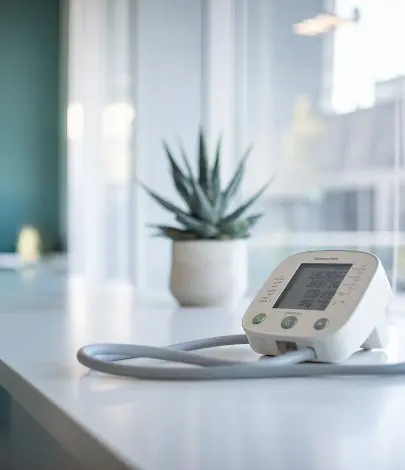
If you have hypertension, home blood pressure monitoring is one of the most useful things you can do during treatment. NICE recommends using a validated upper-arm monitor and recording readings twice daily (morning and evening) for at least four days before each clinical review.
Sit quietly for five minutes before each measurement. Take two readings one minute apart and record the lower of the two. Over time, you will build a log that your doctor can use to adjust medication safely.
Watch for symptoms that suggest your blood pressure is dropping too low. These include dizziness when standing up, blurred vision, persistent fatigue, and feeling faint. If you experience any of these, contact your prescribing doctor before your next dose.
Conversely, if your blood pressure does not improve despite significant weight loss on Mounjaro, further investigation may be needed to rule out secondary causes of hypertension such as renal artery stenosis or primary aldosteronism.
The Bottom Line
Tirzepatide consistently lowers blood pressure by 6 to 11 mmHg in people with obesity, with roughly 70% of the effect driven by weight loss and the remainder by direct metabolic and anti-inflammatory mechanisms. For patients with obesity-related hypertension, Mounjaro offers a meaningful reduction in cardiovascular risk, but the benefits depend on ongoing treatment and should be managed in close partnership with your doctor.
Frequently Asked Questions
How much does Mounjaro lower blood pressure? In the SURMOUNT-1 trial, tirzepatide reduced systolic blood pressure by 7 to 11 mmHg over 72 weeks, depending on the dose. Diastolic blood pressure fell by 4 to 5 mmHg. These reductions are comparable to adding a low-dose antihypertensive medication.
Can Mounjaro replace blood pressure medication? Mounjaro is not a licensed treatment for hypertension and should not be used as a direct replacement for blood pressure drugs. However, some patients achieve sufficient blood pressure improvement through weight loss that their doctor can safely reduce or stop one or more antihypertensive medications.
How quickly does blood pressure improve on Mounjaro? Blood pressure improvements tend to track weight loss. Most patients begin to see measurable changes within the first 8 to 12 weeks of treatment, with the greatest reductions occurring by week 36 to 72 as weight loss plateaus.
Does blood pressure go back up if you stop Mounjaro? SURMOUNT-4 data showed that blood pressure tends to rise again when tirzepatide is discontinued, in parallel with weight regain. This is consistent with the understanding that the blood pressure benefit is largely mediated by sustained weight loss.
Is Mounjaro safe if I already have low blood pressure? Patients with naturally low blood pressure (systolic below 90 mmHg) should be monitored carefully, as tirzepatide may cause further reductions. Your prescribing doctor will assess whether Mounjaro is appropriate for you and may recommend starting at the lowest dose with close follow-up.
Ready to Take the Next Step?
CutKilo is a doctor-led weight-loss service based at 86 Harley Street, London. If you have been considering Mounjaro for weight loss and want to understand how it could help manage your blood pressure, start the CutKilo questionnaire to see whether you are eligible. You can also call us on 0207 637 8227 to speak with a member of the clinical team.
BMI Calculator
*If you have an Asian, Chinese, Middle Eastern, Black African or African-Caribbean family background:
- 23 to 27.4 – overweight
- 27.5 or above – obese